

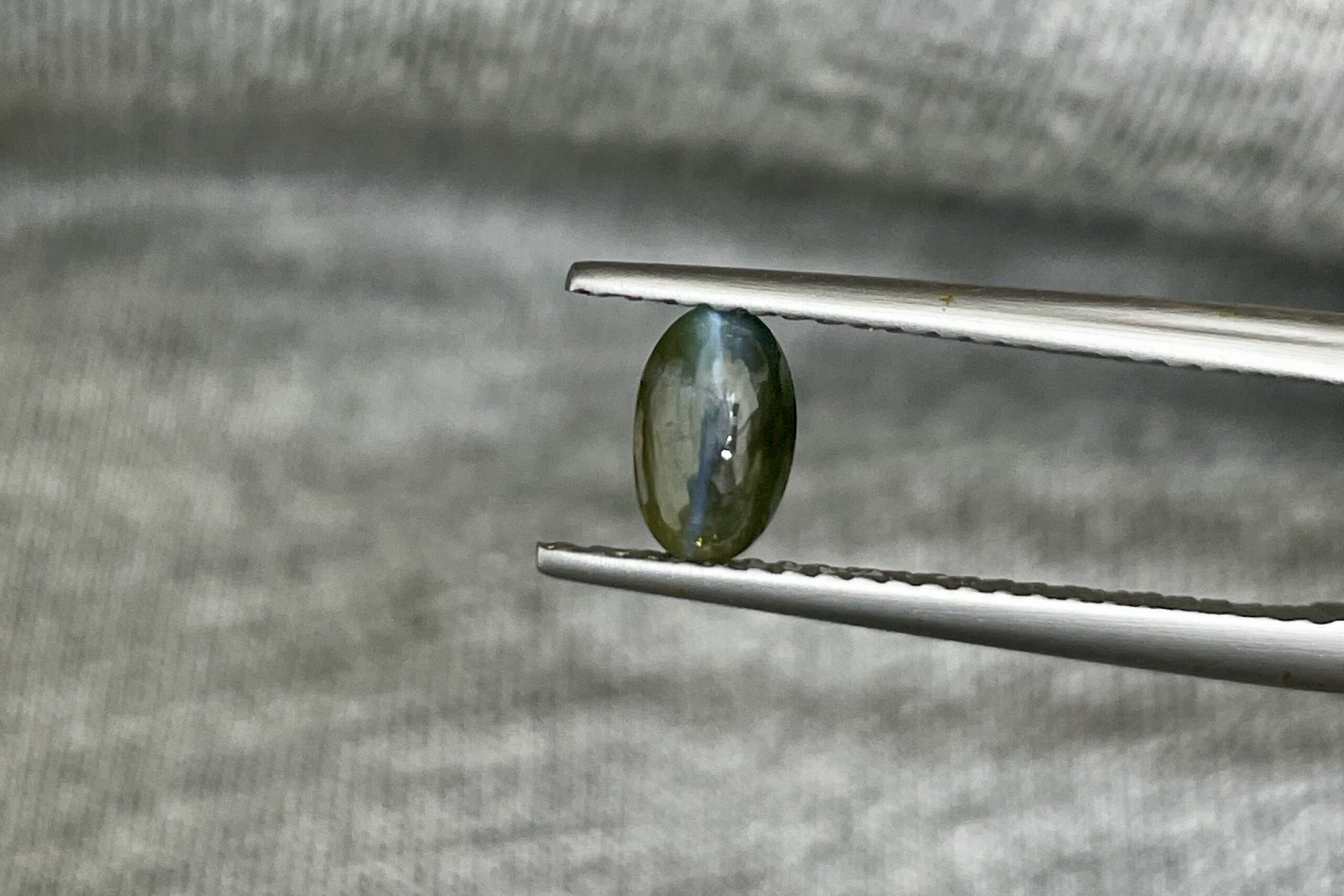
Alexandrite cat’s eye cabochon shape, 0.76 carats
Gemstone details
Gemstone & origin
Weight, shape & measurements
Description
Treatments & certifications
Reference
Our Promise
100% natural gemstones
Certified by international gem labs
Shipping worldwide
Priority customer service
About Alexandrite
Alexandrite is a rare and highly prized gemstone, renowned for its unique color-changing properties and rich symbolism. Here are some key facts about alexandrite:
Historical Significance: Alexandrite is a rare color-changing variety of chrysoberyl. It was first discovered in 1830 in Russia’s Ural Mountains. Named after Czar Alexander II.
Symbolism and Meaning: Alexandrite is associated with good fortune, luck, and personal growth. It is considered a birthstone for June and is linked to the Gemini zodiac sign. Many believe that alexandrite promotes positive energy, harmony in relationships, and spiritual growth.
Value and Rarity: Natural alexandrite is now rarer than diamonds, with fine-quality stones being extremely expensive. The intensity of the color saturation and the dramatic nature of the color change significantly influence the quality and value of alexandrite.
Color: Alexandrite is renowned for its unique color-changing properties, which are influenced by the presence of chromium impurities in its chemical structure.
Color Appearance:
- Daylight: Alexandrite typically appears green or bluish-green under natural daylight. This is because chromium ions absorb light in the dark blue and yellow regions of the visible spectrum, allowing the green wavelengths to dominate.
- Incandescent Light: Under incandescent lighting, such as from candles or lamps, alexandrite transforms into a purplish-red or ruby-red hue. This change occurs due to the lower absorption of red light by chromium ions in these conditions.
Composition: The composition of alexandrite is a variety of chrysoberyl, Chemical Formula: (Beryllium Aluminum Oxide).
Hardness: Alexandrite boasts a hardness of 8.5 on the Mohs scale, making it one of the hardest gemstones after diamonds and corundum.
Mining Locations: It is now also found in Brazil, Sri Lanka, Tanzania, Madagascar, Zimbabwe, India, and Myanmar.
These countries contribute to the global market, each offering unique characteristics in terms of color, clarity, and quality.
Related products
-

Unheated reddish orange sapphire oval shape, 1.17 carats
ID: 00000023$2,500.00